

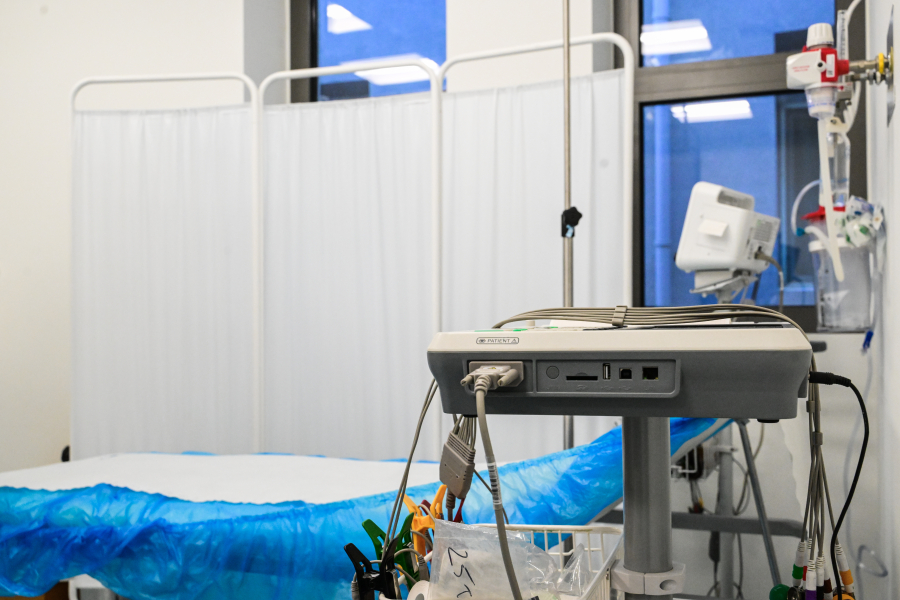
To tackle rising healthcare expenses, the insurance sector has put forward several proposals.
As economic pressures mount and public concerns grow, insurance companies in Greece have chosen to hold back on raising health insurance premiums. However, the Hellenic Association of Insurance Companies (EAEE) warns that the industry cannot shoulder the rising costs of healthcare alone and is calling on the Greek government to introduce meaningful support measures.
"We have requested measures from the government and are waiting for action to lower our costs. We remain optimistic that the government will respond," said EAEE President Alexandros Sarrigeorgiou on Tuesday, expressing hope for immediate policy interventions to ensure the sustainability of health insurance.
To tackle rising healthcare expenses, the insurance sector has put forward several proposals. One key suggestion is to expand the use of the Gr-DRG hospital payment system within private healthcare facilities. Already implemented in Greece's public sector, this system is designed to regulate hospitalization expenses, which play a major role in determining insurance premiums. Additionally, insurers are advocating for a streamlined regulatory framework for establishing private clinics, aiming to boost competition and attract investment into Greece's healthcare market.
A central demand from the EAEE is tax relief in the healthcare sector. The association is pushing for a reduction in the 24% value-added tax (VAT) imposed on private medical services, arguing that it significantly increases the cost of treatment. It is also calling for a reduction in the 15% tax on health insurance premiums to make private coverage more affordable for Greek citizens.
Despite the industry's efforts to maintain stability, insurers contend that recent government policies concerning health insurance pricing do not go far enough. The EAEE warns that these measures fail to address the root causes of rising costs, leaving insurance companies burdened with expenses that stem not from their own practices but from broader inefficiencies in Greece's healthcare infrastructure.
Insurers also stress that government regulations do not fully account for the complexity of hospitalization expenses. Beyond medical services, hospitalization costs also include pharmaceuticals, medical supplies, and specialized products—elements that make up approximately 40% of total expenses. While incorporating these costs into hospital pricing structures is a step in the right direction, the EAEE argues that it is insufficient.
from Όλες Οι Ειδήσεις - Dnews https://ift.tt/SbBM8Ec
via IFTTT