

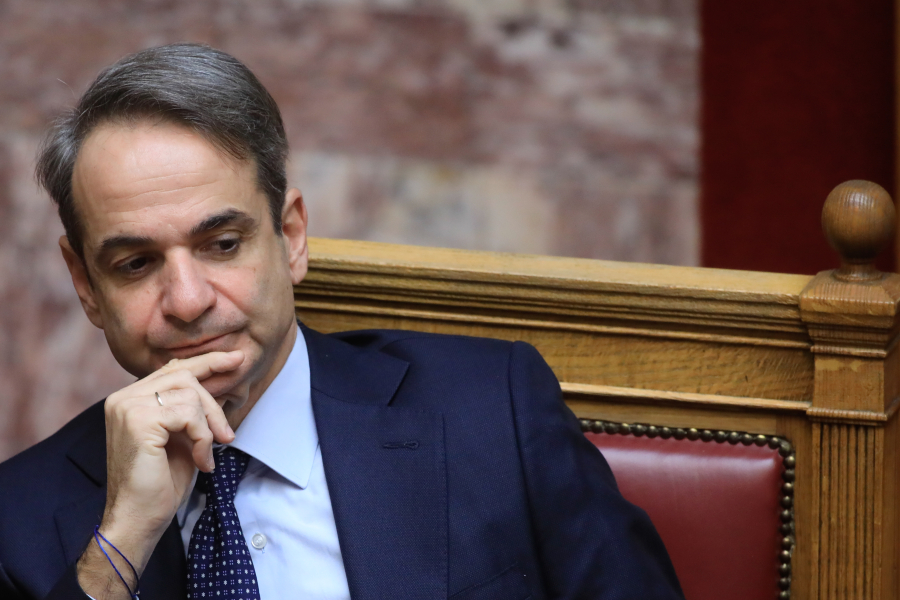
The Greek government, led by Prime Minister Kyriakos Mitsotakis, now faces a historic responsibility. For nearly six years, it has failed to pass the necessary implementing legislation for a revised constitutional article aimed at holding former ministers accountable for potential crimes.
This delay is not just a bureaucratic oversight—it is a glaring political issue that raises serious concerns about possible cover-ups. If the government does not act immediately, it risks leaving a legal loophole that could prevent justice from being served, particularly in cases related to one of Greece's most tragic disasters: the Tempi railway crash.
In 2019, Greece took a significant step toward greater accountability by amending Article 86 of the Constitution. The change abolished a special statute of limitations that had previously shielded former ministers from prosecution if legal action was not initiated within an unusually short time frame. This reform was widely seen as a victory for the rule of law, ensuring that politicians would no longer be treated differently from ordinary citizens in matters of criminal responsibility.
However, since then, successive governments have failed to align Greece's ordinary laws with this constitutional change. As a result, outdated legal provisions—despite being superseded by the Constitution—still remain in force, creating confusion and potential legal loopholes. This legislative inaction threatens to derail efforts to hold former officials accountable for both past and recent crises, including the 2023 Tempi train disaster, which killed 57 people and exposed severe safety failures in the country's railway system.
The consequences of this legislative gap could be profound. If the government does not act before the current parliamentary session ends in the summer of 2025, cases against former ministers could become legally impossible to prosecute. The delay opens the door to potential impunity, allowing those responsible for major failures to escape justice on technical grounds.
For example, imagine that a former transport minister—who was politically responsible for railway operations at the time of the Tempi disaster—is facing charges. Prosecutors have gathered substantial evidence against him, but due to the outdated law, the case must be filed before Parliament's session ends in 2025. If that deadline passes, no legal action can be taken. Even if courts acknowledge that the Constitution overrides the outdated law, a former minister could challenge this interpretation, plunging the case into legal uncertainty—ultimately delaying or even preventing prosecution.
The stakes go beyond the courtroom. If the government allows this legal vacuum to persist, accusations of political cover-ups will gain traction. Public trust in Greece's institutions has already been weakened by past corruption scandals, economic mismanagement, and failures of governance. If high-profile cases—especially those tied to national tragedies like Tempi—end in legal deadlock, the damage to public confidence could be irreversible.
The government now has one last opportunity to prove that it is committed to justice. It must pass the implementing legislation before Parliament's current session ends, ensuring that the revised Article 86 is fully enforceable. This legal update must be retroactive to 2019, covering all cases that have emerged since the constitutional amendment. Otherwise, officials linked to past wrongdoings could walk free—not because they are innocent, but because of a technicality.
If Mitsotakis' government fails to act, the political consequences will be severe. Beyond the immediate impact on Greece's domestic politics, the country's international reputation could also suffer. Greece has worked hard in recent years to restore its credibility after the financial crisis and to position itself as a stable democracy in a turbulent region. A legal system that allows politicians to evade responsibility would undermine these efforts, reinforcing negative stereotypes of impunity and corruption in Greek politics.
Greek citizens are demanding justice, transparency, and accountability. The government must now decide: Will it stand with the people—or with those seeking to evade responsibility?
from Όλες Οι Ειδήσεις - Dnews https://ift.tt/vczUo6Z
via IFTTT