
Within Greece's own government, doubts are surfacing about whether Athens should continue to champion a project that Nicosia itself appears unwilling to pursue.
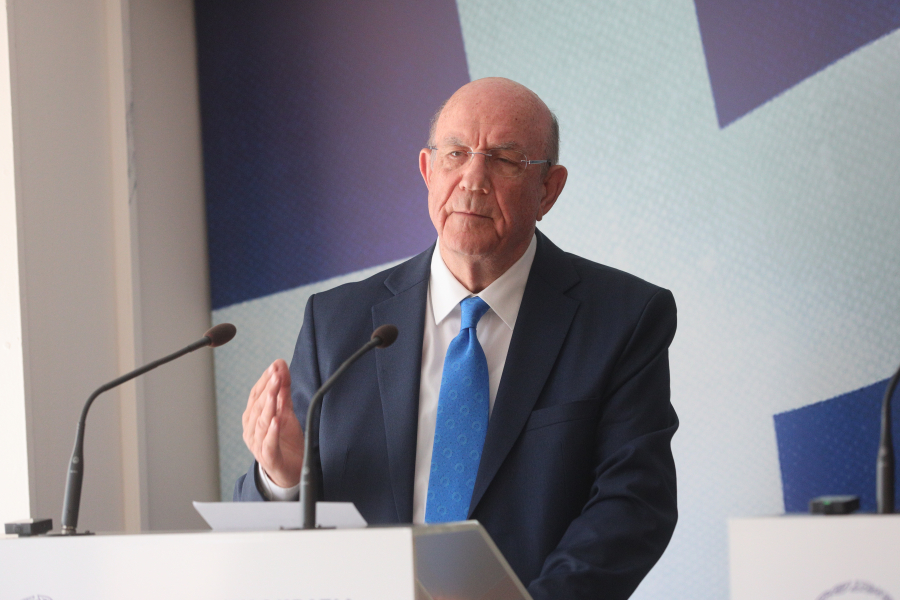
A diplomatic storm is brewing between Athens and Nicosia over the long-delayed Greece–Cyprus electricity interconnection, after Cypriot Finance Minister Makis Keravnos openly questioned the project's viability and hinted that his government may be prepared to abandon it.
Keravnos, whose signature is required to release €25 million in funding for Greece's Independent Power Transmission Operator (ADMIE), has twice in the past month dismissed the €1.9 billion scheme as unsustainable. Speaking to Kathimerini Cyprus, he cited two independent studies that, he said, conclude the project is not viable under its current terms. Without his approval, the decision of Cyprus's energy regulator to recover expenses already paid out by ADMIE collapses, threatening the payment schedule with the French manufacturer Nexans and pushing the project further into uncertainty. "It seems absurd for taxpayers to pay €25 million for a project that is frozen," Keravnos argued in early August.
Athens, however, insists it will not back down. Greek Foreign Ministry officials continue to describe the electricity link between Greece, Cyprus and Israel as a project of "geostrategic importance," stressing that it enjoys European Union support and rests on the foundation of international law. Foreign Minister Giorgos Gerapetritis has repeatedly said that laying the cable is essential for ending Cyprus's energy isolation and that it forms a key piece of the wider geopolitical puzzle in the Eastern Mediterranean.
Yet within Greece's own government, doubts are surfacing about whether Athens should continue to champion a project that Nicosia itself appears unwilling to pursue. Senior officials in the foreign and defense policy establishment argue that Greece has shouldered disproportionate financial, political and diplomatic costs while Cyprus—the main beneficiary—delays and hesitates. They warn that clinging to the plan risks damaging Greece's credibility, unnecessarily escalating tensions with Turkey, and trapping the government in an expensive dead end.
The French company Nexans, contracted to manufacture the undersea cable, has already signaled its impatience. Executives told analysts in August that if the Great Sea Interconnector fails to proceed, production will be redirected to another project. The European Commission, for its part, maintains that the link remains a strategic priority for EU energy security and has called for its completion "as soon as possible," while acknowledging that responsibility lies with those tasked with implementation.
The coming weeks are likely to be decisive. September is expected to bring clarity on whether the project survives or collapses under the weight of political hesitation and financial dispute. For Athens, the dilemma is stark: press ahead with a venture Cyprus appears ready to abandon, or use Keravnos's hard line as a chance to disengage. Either path carries risk. A withdrawal could be interpreted as a concession to Turkish pressure, even if the real obstacle lies in Nicosia. Continuing, on the other hand, may mean fighting a battle for which Cyprus itself has little appetite.
from Όλες Οι Ειδήσεις - Dnews https://ift.tt/t16Sh9g
via IFTTT