
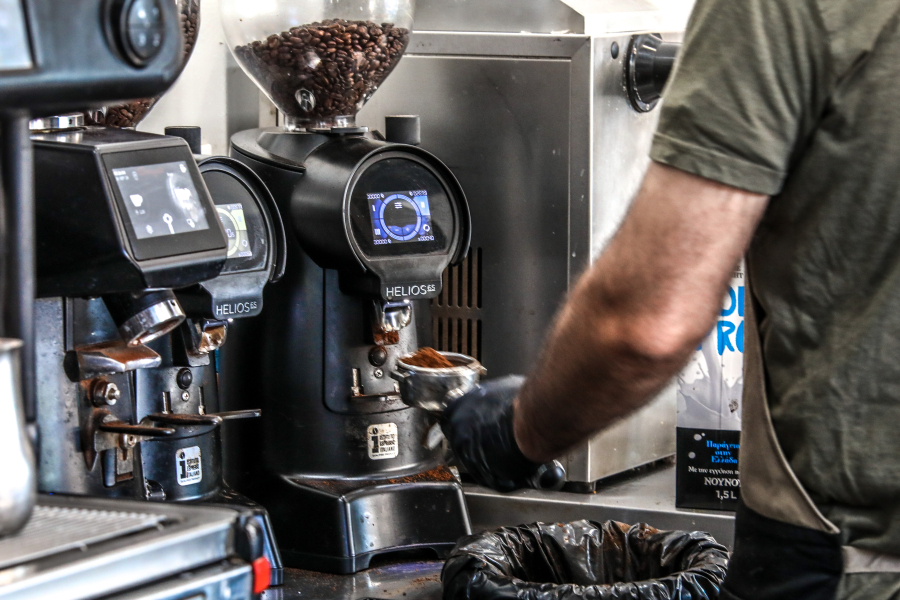
For many Greeks, coffee is more than a drink — it's a ritual, a symbol of social life, and a small pleasure woven into daily routine. But that once-affordable comfort is becoming an expensive habit.
From supermarket shelves to café tables, prices are climbing steadily, transforming what used to be a simple indulgence into a noticeable strain on household budgets.
According to the latest figures from Greece's statistics authority, ELSTAT, supermarket coffee prices in September were almost 20 percent higher than a year earlier, and nearly 50 percent higher than five years ago. In the Athens region, a takeaway coffee now costs between €1.80 and €2.80 depending on quality and location, while sitting down for one can start at €3.20 and reach €5 or more. Different VAT rates — 13 percent for takeaway coffee and 24 percent for table service — add further pressure to final prices, as cafés and roasteries struggle with rising energy and labor costs and can no longer absorb increases.
The price surge, however, is not merely the result of domestic taxes or operating costs. The climate crisis has struck hard at coffee-growing regions such as Brazil and Colombia, leading to smaller harvests and soaring international prices. Years of prolonged droughts and extreme weather have reduced global supply, while demand has remained steady. That imbalance, intensified by speculation in commodity markets, has triggered a chain reaction that ends with higher prices for consumers everywhere.
The trend is not unique to Greece. Across Europe, the cost of a cappuccino has jumped sharply, according to data from the platform Numbeo. Copenhagen is currently the most expensive capital for coffee drinkers, with a cup averaging €5.81, followed by Reykjavik at €5.33 and Zurich at €5.27. Prices exceeding €4 are now common in much of Scandinavia as well as in the United Kingdom, Belgium, the Netherlands, France, and Austria.
Eastern Europe and the Balkans, by contrast, remain more affordable. In Italy — where coffee is almost sacred — a cappuccino costs on average €1.53, while in Kosovo it can still be found for as little as €1.27. Yet the apparent affordability can be deceptive. Purchasing power varies widely, and lower incomes mean that even a cheap cup can represent a greater burden for consumers in these regions.
Using what economists call the "Cappuccino Index," which compares local coffee prices to average monthly wages, Italians can theoretically buy around 1,400 cappuccinos with one month's salary. In Switzerland and Luxembourg, the figures are similarly high. In much of Eastern Europe, however, the number drops sharply — and Greece falls closer to that end of the scale.
For Greek consumers, coffee is taking up a growing share of disposable income. A single cup now costs proportionally more than it does in most Western European countries. Once a symbol of carefree afternoons and friendly conversation, the humble coffee has, for many, become a small but unmistakable luxury of everyday life.
from Όλες Οι Ειδήσεις - Dnews https://ift.tt/joVIACm
via IFTTT