
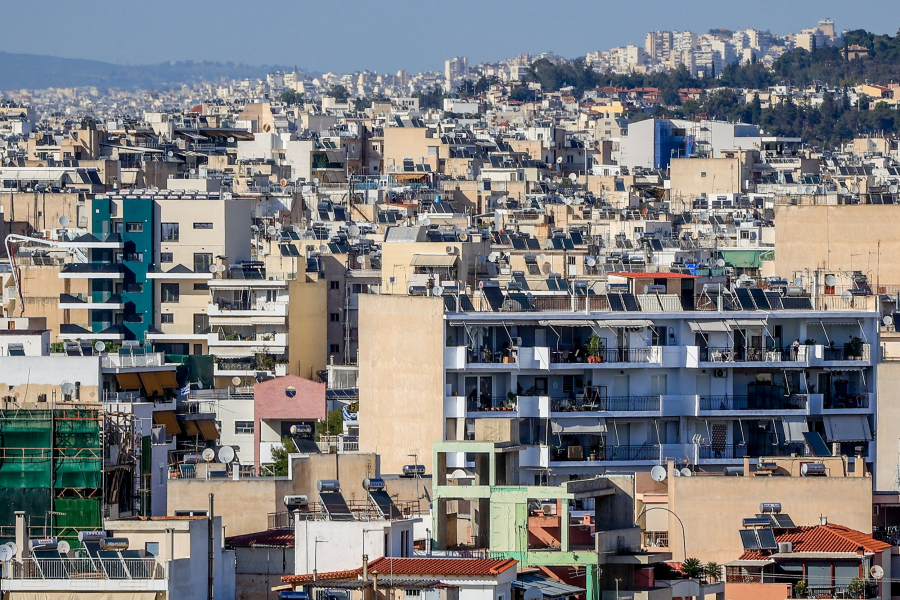
Many property owners, encouraged by the sharp appreciation of recent years, believe they can sell decades-old apartments at prices similar to those of new builds.
Greece's once-buoyant property market has hit a slowdown, weighed down by inflated asking prices that have driven buyers to the sidelines. Despite a 9% rise in average sale prices over the past eight months, revenue from property transfer taxes has dropped by 4%, signaling a sharp fall in transaction volumes. The figures reveal a market trapped in stagnation: homeowners are clinging to unrealistic price expectations, while prospective buyers increasingly walk away.
Much of the problem stems from sellers overestimating the value of older homes. Many property owners, encouraged by the sharp appreciation of recent years, believe they can sell decades-old apartments at prices similar to those of new builds. They often cite desirable locations or the "quality materials" of past construction eras, but fail to consider modern standards of energy efficiency and earthquake safety. As a result, 30- or even 40-year-old apartments—often unrenovated—are being listed at prices nearly equal to those of brand-new developments.
Some of the examples border on absurd. In central Athens, 1960s apartments without renovation or view are offered for around €4,700 per square meter. In the city's southern suburbs, the massive Ellinikon redevelopment project has triggered speculative pricing, with owners of 30-year-old properties demanding about €4,200 per square meter, despite outdated infrastructure and no energy upgrades. The northern suburbs are no exception: unfinished buildings from the financial crisis years are on the market for €1,800 per square meter, even though completing them would cost nearly as much again—pushing the total investment to or above €900,000.
The consequences are visible across the housing sector. Buyers looking for affordable options often turn to older properties, only to find that the price gap with new developments is negligible. Many ultimately abandon their plans, leaving the market frozen and morale sinking. Real estate agents report that the final sale prices, when deals do happen, are often up to 30% lower than the initial asking prices.
Even so, many sellers remain unwilling to adjust. Listings stay online for months with inflated figures, reflecting a market divorced from reality. The recent decline in demand from foreign investors—following changes to Greece's "Golden Visa" program and tighter rules on short-term rentals—has only deepened the cooling trend. International buyers and local investors alike now prefer new, energy-efficient developments, leaving much of the country's aging housing stock overpriced and unsold.
from Όλες Οι Ειδήσεις - Dnews https://ift.tt/c7OsKCF
via IFTTT