

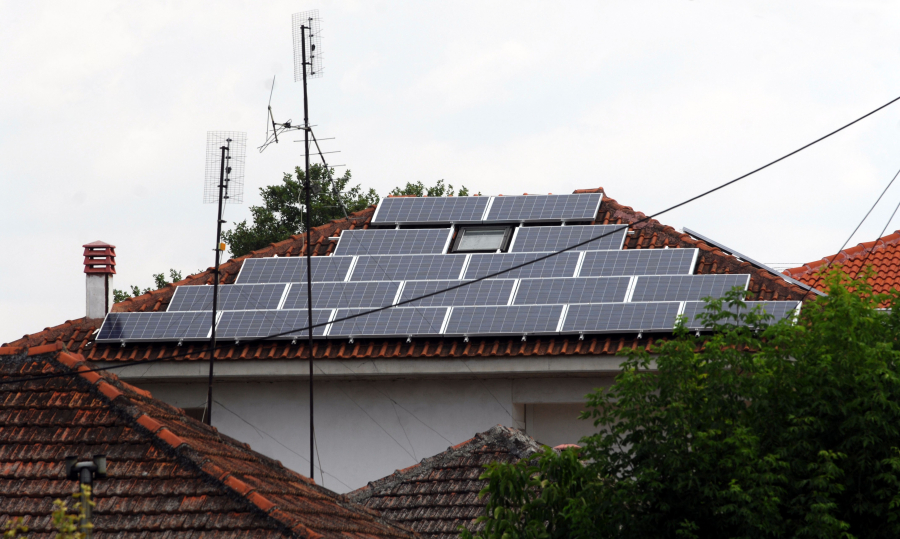
On May 1st, Greece experienced an extraordinary energy market event that reflects a broader trend gripping Europe: for six consecutive hours, the Greek electricity market registered negative prices, plunging to a record low of -€50 per megawatt-hour at midday.
This marks the first time Greece has seen such deep negative pricing, a phenomenon that has become increasingly common across the continent.
The conditions were ripe for a price collapse. With May Day being a public holiday, electricity demand was minimal. At the same time, clear skies and strong northern winds triggered a spike in renewable energy generation, particularly from solar and wind farms. The simultaneous low consumption and oversupply pushed the system into surplus, forcing the market into negative territory.
Under European Union regulations, when electricity prices fall below zero, producers must pay to inject power into the grid—a counter-intuitive outcome that aims to prevent grid overload and encourage producers to scale back. Thousands of Greek renewable energy operators, particularly smaller producers, opted to shut down their plants entirely to avoid paying for their own output. Those who didn't voluntarily disconnect risked being forcibly curtailed by Greece's grid operator, ADMIE, which issued an emergency warning advising producers to take their systems offline during the critical hours of 11:00 to 17:00.
This curtailment is expected to be the largest Greece has ever recorded. The surplus is estimated to have peaked at more than 7 gigawatt-hours during late morning hours, with a total of 54 GWh projected for the day—a significant volume in the context of the relatively small Greek grid.
While this is a first for Greece, it is far from an isolated case in Europe. On the same day, other European countries were experiencing even more extreme pricing. The Netherlands saw prices plunge to -€142.42/MWh, with Germany, Luxembourg, Hungary, Poland, and others not far behind. Only Italy managed to remain marginally in the black.
These developments highlight the challenges of integrating large volumes of intermittent renewable energy into traditional power systems. They also underscore the financial risk for smaller, independent producers—particularly those with market-based contracts who now face the reality of paying to produce during surplus periods.
from Όλες Οι Ειδήσεις - Dnews https://ift.tt/TeZSKmr
via IFTTT