
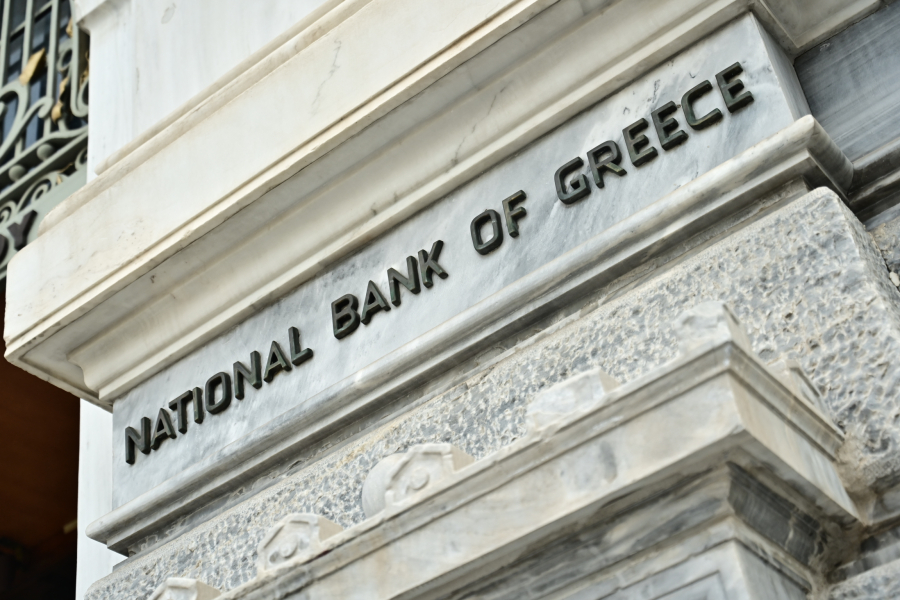
Government officials say the planned intervention would not seek to regulate the level of banking fees themselves, but rather the mechanism through which they are introduced.
The Greek government is weighing changes to banking rules that would effectively end the practice of automatically enrolling customers into fee-based services without their explicit approval, following a court victory by a consumer rights group against the country’s largest lender.
The case, brought by Greek consumer protection association EKPIZO against National Bank of Greece, centered on a monthly charge of €0.80 attached to so-called “privileged” retail banking accounts. But the implications now extend well beyond the fee itself, opening a wider debate over how banks introduce paid products and obtain customer consent.
Officials at Greece’s Ministry of National Economy and Finance are examining legislation that would replace the current “opt-out” approach commonly used in banking with an “opt-in” system requiring customers to actively approve any paid service before charges can be applied.
The proposed shift would mark a significant change in Greek retail banking practices, aligning more closely with consumer-protection principles that require explicit consent rather than passive acceptance.
The dispute began when National Bank of Greece informed customers holding standard savings and current accounts that their products would be converted into enhanced “privileged” accounts offering additional services for a monthly fee.
Customers, however, were not required to actively accept the upgrade. Instead, the package would be activated automatically unless account holders notified the bank within a specified period that they wished to opt out.
Consumer advocates argued that the process effectively treated silence as consent, exposing customers to recurring charges without an affirmative decision.
The Athens Court of First Instance sided with EKPIZO, ruling that the bank’s communication was misleading. The court found that several services presented as added benefits—including bill payments, standing orders and transfers through Greece’s IRIS instant payments system up to €500 per day—were already available free of charge.
Judges also gave particular weight to the automatic nature of the enrollment process, concluding that default activation reinforced the misleading character of the practice.
The ruling has since accelerated policy discussions in Athens.
Government officials say the planned intervention would not seek to regulate the level of banking fees themselves, but rather the mechanism through which they are introduced. The objective, according to officials, is to strengthen transparency and ensure consumers cannot be considered to have accepted a financial product simply because they failed to respond in time.
The potential impact could extend across a broad range of banking services.
Greek banks have used similar opt-out structures in subscription-based digital banking packages, SMS alert services, automatic renewals tied to insurance products and card protection programs, as well as marketing consents for personalized offers delivered through mobile and online banking platforms.
Under the model being considered, banks would no longer be able to activate such services by default and subsequently ask customers to cancel them. Instead, lenders would need to document explicit approval—either digitally through online banking systems or through signed authorization at branch level—confirming that customers understood both the cost and the services provided.
For Greece’s banking sector, the proposed change could represent one of the most consequential consumer-protection reforms in years, shifting the burden of action from depositors to lenders and potentially reshaping how retail banking products are marketed and sold.
from Όλες Οι Ειδήσεις - Dnews https://ift.tt/dh5UoHM
via IFTTT